Amylase for Coconut Milk and Cream Viscosity Control
Enzymereach is an enzyme supplier for coconut processing focused on practical plant outcomes: smoother flow, lower handling drag, more consistent heat transfer, and steadier downstream separation.
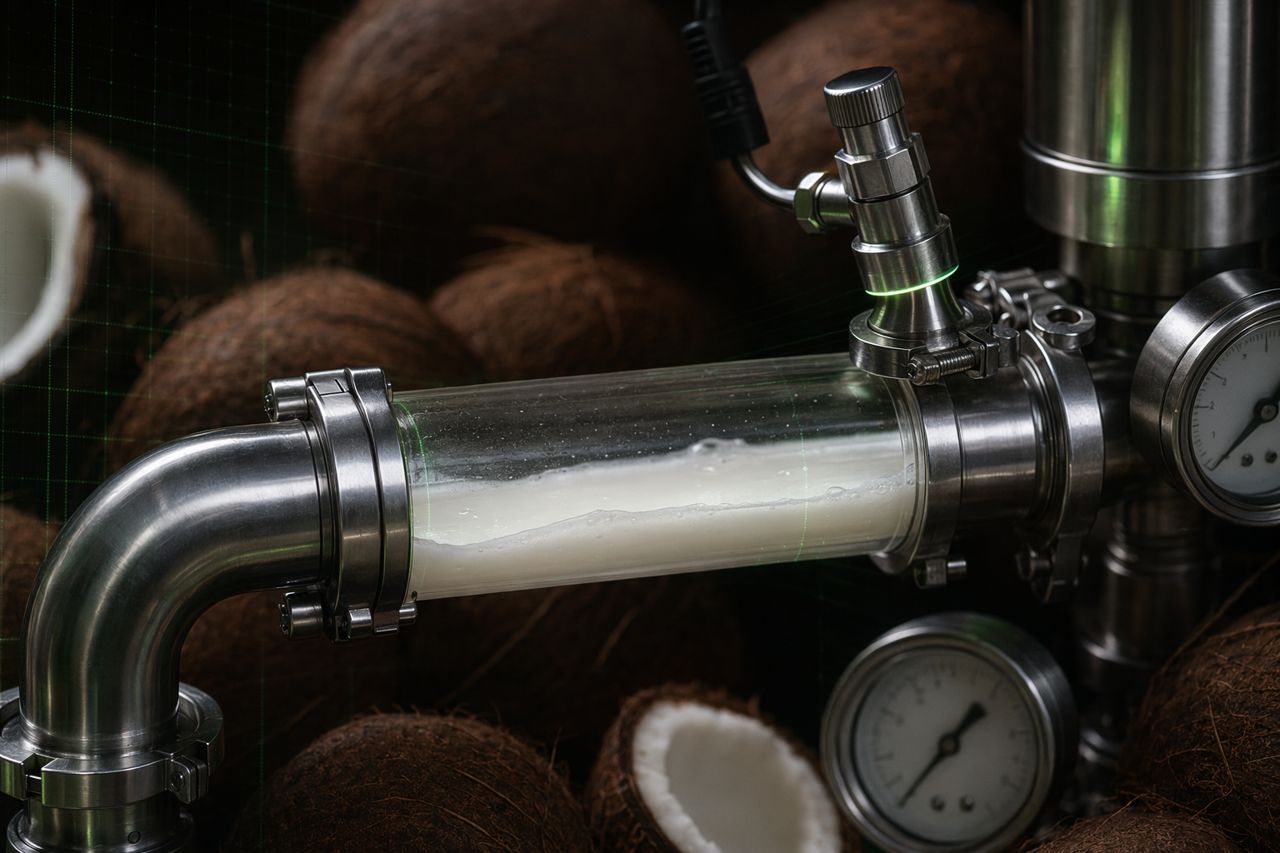
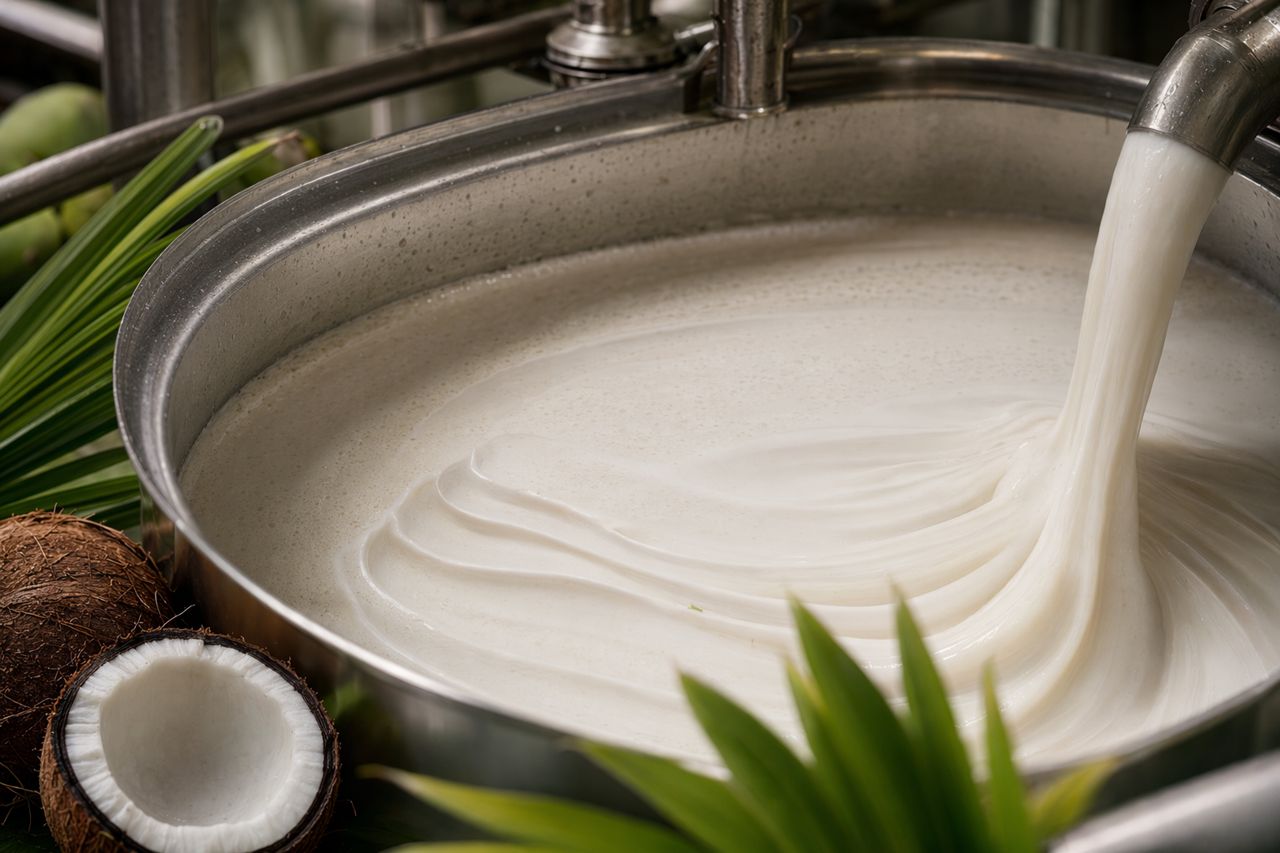
For coconut milk and cream lines, viscosity variation can create a chain reaction across the plant. Pumps run harder. Holding tanks discharge unevenly. Filters blind faster. Separators see unstable feed behavior. Heat exchangers lose consistency. Finished texture can drift between batches.
A targeted amylase program can help when starch, dextrin, or carbohydrate-related viscosity is contributing to line resistance. Enzymereach helps processors evaluate where amylase fits, how to apply it without over-thinning, and how to keep the process controlled from extraction through filling. Amylase is supplied wholesale, in bulk, to coconut milk and cream manufacturers, ingredient resellers and formulation companies.
Request a quote: use the inquiry form and name the product (amylase, or the viscosity problem), the quantity (trial lot and recurring volume) and the delivery destination. Orders are quoted individually; we do not sell retail packs.
Built for coconut milk and cream production realities
Coconut processing plants do not need generic enzyme language. They need a supply partner that understands wet coconut operations, variable raw material, and the pressure to keep product moving.
Enzymereach supports amylase use cases where processors are dealing with:
- High or variable viscosity in coconut milk or coconut cream
- Pumping resistance after grinding, extraction, or standardization
- Slow filtration or rising filtration pressure
- Inconsistent feed behavior into separators or clarifiers
- Uneven heating and cooling performance due to flow variation
- Batch-to-batch texture drift caused by raw material variation
- Excessive hold time caused by slow transfer or poor tank discharge
- Texture targets that require viscosity control without losing creamy body
What amylase can improve in the line
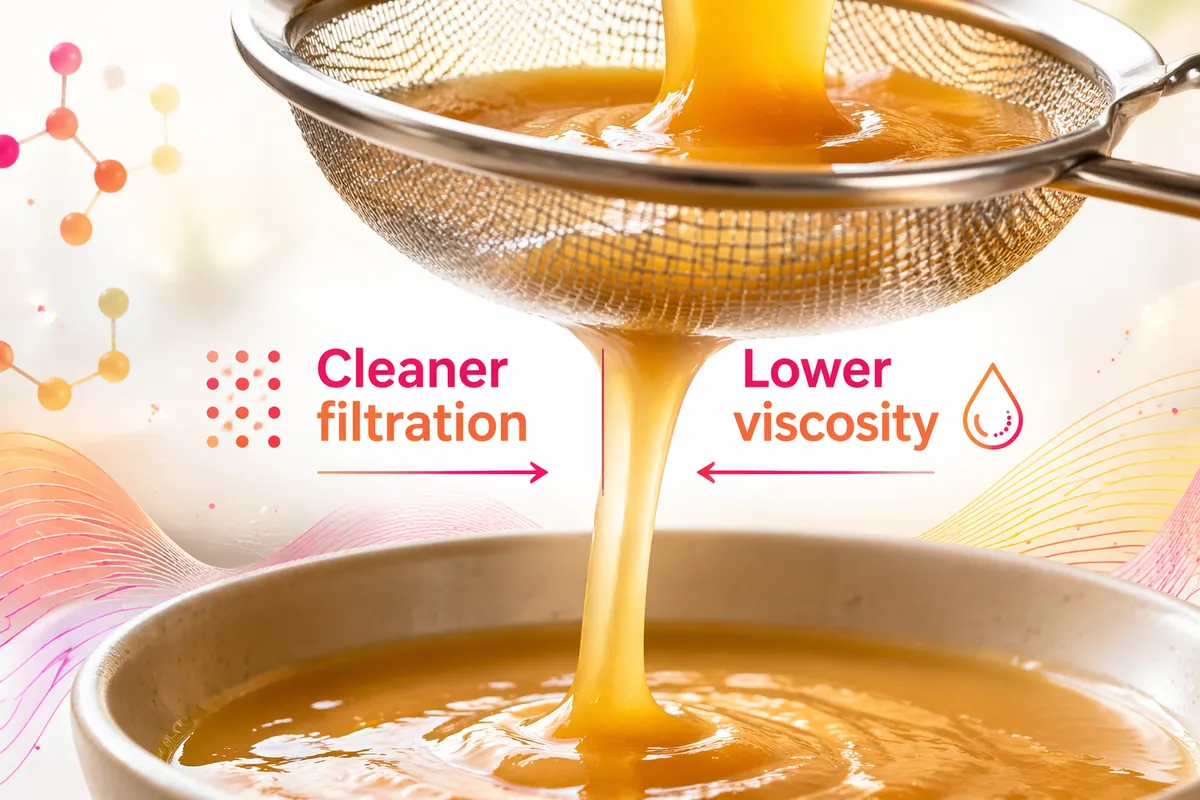
Amylase is used to reduce viscosity contribution from starches and dextrins where they are present in the process stream. In coconut milk and cream applications, the value is not simply “thinner product.” The value is controlled flow behavior that supports the rest of the plant.
More predictable pumping
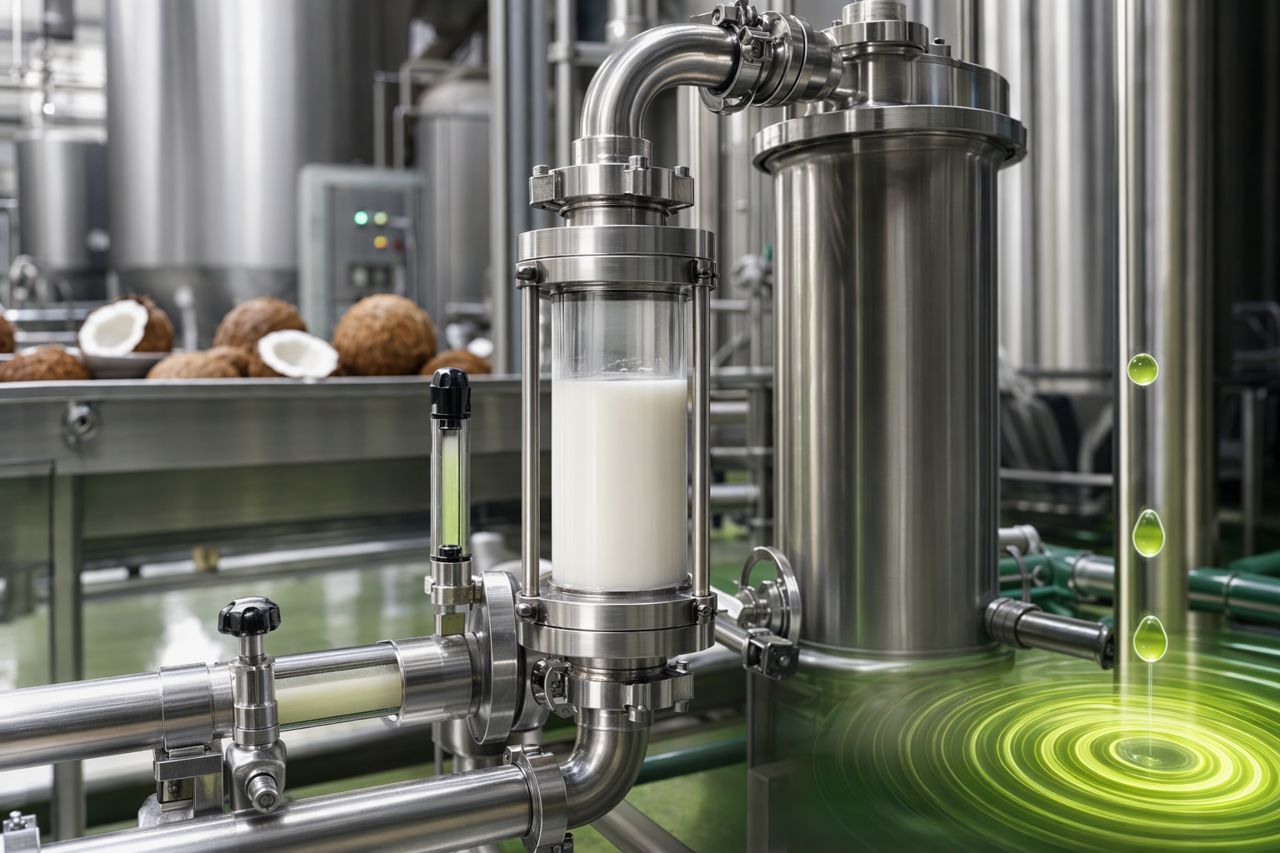
Reducing carbohydrate-driven thickening can help lower resistance through pumps, elbows, balance tanks, and transfer lines. This supports steadier throughput and reduces the operational friction caused by heavy or inconsistent batches.
Lower filtration drag
When viscosity contributes to filter loading or slow passage through screens and filtration equipment, amylase treatment can help improve flow before the filtration step. The result can be cleaner scheduling, fewer interruptions, and more stable filter performance.
Better heat-transfer consistency
Coconut milk and cream viscosity affects how product moves through heat exchangers. A controlled amylase step can support more uniform flow behavior, helping production teams manage heating, cooling, and thermal process consistency.
More stable separation behavior
Separators and clarifiers perform best when feed conditions are predictable. By reducing avoidable viscosity variation, amylase can help create a more manageable feed profile for downstream equipment.
Where amylase fits in coconut processing
The best addition point depends on the plant layout, target texture, and downstream process. Enzymereach helps evaluate use around:
- Post-grind slurry conditioning
- Coconut milk extraction streams
- Standardization tanks before heating
- Pre-filtration or pre-separation holding stages
- Coconut cream handling where flow control is needed
- Blended coconut beverage bases where carbohydrate load varies
The key is control. Amylase should be applied where it has enough contact to improve flow, but not so aggressively that the final product loses the body and mouthfeel expected from coconut milk or cream.
Practical fit: when amylase is the right conversation
Amylase is not a universal answer for every coconut viscosity issue. Some viscosity problems are driven mainly by fat structure, protein behavior, fiber fines, stabilizers, temperature, homogenization, or total solids. Enzymereach starts with the process problem and then checks whether amylase is the right tool.
A strong fit is more likely when your team sees:
- Viscosity increasing with certain raw coconut lots
- Thickening after grinding, extraction, or holding
- Filtration slowdown that tracks with carbohydrate-rich solids
- Pumping problems that are not fully explained by fat or temperature alone
- Coconut milk or cream batches that vary despite similar formulation targets
Supply support for production teams
Enzymereach works with processors who need reliable enzyme supply plus application guidance that respects real plant constraints.
Our support can include:
- Enzyme selection for the target coconut stream
- Process review around temperature, pH, contact time, and addition point
- Trial planning for viscosity, flow, filtration, and separation observations
- Scale-up support from plant trial to routine production
- Guidance on avoiding over-treatment and texture loss
- Documentation support for procurement and quality teams
What to share for a faster recommendation
To help us recommend the right amylase approach, include the following when contacting Enzymereach:
- Product type: coconut milk, coconut cream, beverage base, or intermediate stream
- Current viscosity or handling issue in production terms
- Process stage where the problem appears
- Typical solids and fat range, if available
- Filtration, separation, or heat-transfer bottlenecks
- Temperature window and available holding time
- Desired finished texture or flow target
- Trial volume and expected production scale
Request a quote
If viscosity is slowing your coconut milk or cream line, Enzymereach can help evaluate whether amylase belongs in your process. We supply manufacturers, resellers and distributors at wholesale volumes; pricing, pack format and lead time are quoted per order.
Request a quote through the inquiry form with three things up front: the product, the quantity (trial and recurring) and the delivery destination, plus the process details listed above. We will review the application, recommend a practical enzyme direction, and support the next step toward plant trial.